
Badshahi Mosque Lahore: Pakistan’s Most Famous Mughal Masterpiece – History, Architecture & Visitor Guide 2026
Badshahi Mosque is located in the heart of Lahore, right next to Lahore Fort. It was built by Mughal Emperor Aurangzeb in 1673. It is one of the largest and most beautiful mosques in the world. For over 350 years this mosque has been a symbol of Lahore’s rich history and Islamic heritage. Every person who visits Lahore puts Badshahi Mosque at the top of their list.
Badshahi Mosque is especially peaceful during the early morning hours, when worshippers gather for the Fajr prayer amidst its serene surroundings and majestic architecture. If you want to check the exact Fajr Prayer Time in Lahore, visit our detailed guide on Fajr Prayer Time in Lahore for accurate daily timings.
Badshahi Mosque at a Glance
Before we dive into the full details, here is a quick summary of everything you need to know about Badshahi Mosque.
| Detail | Information |
|---|---|
| Name | Badshahi Mosque (Masjid Badshahi) |
| Location | Walled City, Lahore, Pakistan |
| Built By | Emperor Aurangzeb (Mughal Empire) |
| Construction Started | 1671 |
| Completed | 1673 |
| Construction Period | 2 Years |
| Architectural Style | Mughal Architecture |
| Main Material | Red Sandstone and White Marble |
| Total Capacity | 100,000 Plus Worshippers |
| Courtyard Size | 25,600 Square Meters |
| Number of Minarets | 8 (Four Major and Four Minor) |
| Number of Domes | 3 White Marble Domes |
| UNESCO Status | Tentative World Heritage List (1993) |
| Nearest Landmark | Lahore Fort (Alamgiri Gate) |
| Entry Fee | Free |
| Open Timings | 5:00 AM to 8:00 PM Daily |
Badshahi Mosque took only two years to complete. That is remarkable for a building of this size and beauty. It held the title of the world’s largest mosque for over 300 years. Even today it remains one of the most visited places in all of Pakistan.
Where is Badshahi Mosque Located?
Badshahi Mosque is located in the Walled City of Lahore. This is the oldest and most historic part of the city. The mosque sits right opposite the Alamgiri Gate of Lahore Fort. These two landmarks face each other directly. Together they form one of the most iconic views in all of Pakistan.
The area around Badshahi Mosque is full of history. Minar e Pakistan is just a short walk away. Hazuri Bagh, the beautiful garden built by Maharaja Ranjit Singh, sits right between the mosque and Lahore Fort. Iqbal Park is also nearby. If you visit one of these places you are already very close to Badshahi Mosque.
The mosque is easy to reach from any part of Lahore. You can take a rickshaw, a taxi, or use the Orange Line Metro Train. The nearest metro station is Lahore Fort Station on the Orange Line. From there it is just a few minutes walk to the mosque entrance.
Here is the exact location for your reference:
| Detail | Information |
|---|---|
| Address | Walled City, Lahore, Punjab, Pakistan |
| Nearest Landmark | Alamgiri Gate, Lahore Fort |
| Nearest Metro Station | Lahore Fort (Orange Line) |
| Google Maps | Badshahi Mosque, Lahore |
History of Badshahi Mosque
Badshahi Mosque has survived empires, wars, and centuries of change. Its walls have seen Mughal rulers, Sikh kings, British soldiers, and millions of Muslim worshippers. Here is the full story in simple words.
Construction Under Aurangzeb
Badshahi Mosque was commissioned by Emperor Aurangzeb in 1671. He was the sixth Mughal ruler and son of Shah Jahan who built the Taj Mahal. The mosque was completed in just two years in 1673. That is remarkably fast for a building of this size. It was built directly opposite the Alamgiri Gate of Lahore Fort. This was done on purpose. The mosque and the fort together represented the power of the Mughal Empire. The construction was supervised by Aurangzeb’s foster brother Muzaffar Hussain who was also the governor of Lahore at that time.
Sikh Period
After the decline of the Mughal Empire, Maharaja Ranjit Singh captured Lahore in 1799. During the Sikh period the mosque was no longer used for prayer. The courtyard was turned into a stable for army horses. The small study rooms around the mosque were used to store weapons and ammunition. Some marble from the mosque was also taken and used in other buildings. It was a difficult time for this historic mosque. But the main structure survived.
British Rule
When the British took control of Lahore in 1849 the mosque continued to be used as a military garrison. After the 1857 War of Independence the British made some changes to the mosque. They removed the small study rooms and replaced them with open spaces. However facing growing local pressure they later set up the Badshahi Mosque Authority in 1852 to restore the mosque and return it to Muslim use. In 1919 after the Jallianwala Bagh massacre tens of thousands of people gathered in the mosque courtyard for a historic protest meeting.
After Pakistan Independence
After Pakistan was created in 1947 Badshahi Mosque was finally given the respect it deserved. Major restoration work began under Premier Sikandar Hayat Khan. The work continued for many years and cost millions of rupees. In 1974 the mosque hosted the Second Islamic Summit Conference. Leaders from across the Muslim world including King Faisal and Zulfiqar Ali Bhutto prayed together here. In 1993 the mosque was added to UNESCO’s tentative World Heritage List. Today it stands fully restored and welcomes millions of visitors and worshippers every year.
Architecture of Badshahi Mosque
Badshahi Mosque is a masterpiece of Mughal architecture. Every part of it was designed with great care and skill. The red sandstone walls, white marble domes, and tall minarets make it one of the most beautiful buildings in the world. Here is a closer look at each part.
Courtyard
The courtyard of Badshahi Mosque is enormous. It covers 25,600 square meters which is about 276,000 square feet. It is one of the largest mosque courtyards in the world. Over 100,000 worshippers can stand here at one time during Eid prayers. The entire courtyard is paved with red sandstone tiles. It is surrounded by single story arcades on all four sides. When you stand in the middle of this courtyard you feel very small. The sheer size of it is something you have to see with your own eyes.
Marble Domes
Badshahi Mosque has three white marble domes on top of the prayer hall. The central dome is the largest one. Two smaller domes sit on either side. The bright white color of the domes contrasts beautifully with the deep red sandstone of the rest of the mosque. These domes are visible from a great distance across Lahore. They have become one of the most recognised images of Pakistan.
Minarets
Badshahi Mosque has eight minarets in total. Four are large and four are smaller. The four main minarets stand at the corners of the courtyard. Each one is 60 meters tall. They are octagonal in shape and topped with beautiful marble canopies. From the top of these minarets you can see a large part of Lahore. The total height of the minarets including the base reaches almost 69 meters. They are among the tallest minarets built during the Mughal era.
Prayer Hall
The prayer hall is the main place of worship inside the mosque. It is built from red sandstone with detailed white marble inlay work on the walls. Inside there is a central mihrab which shows the direction of the Qibla. Five arched niches run along the prayer hall wall. The hall can hold up to 10,000 worshippers inside at one time. The acoustic design of the prayer hall is remarkable. A whisper from one corner of the hall can be heard clearly in the opposite corner. This was not by accident. The Mughal architects designed it this way on purpose.
Mughal Design Features
The design of Badshahi Mosque reflects the best of Mughal architecture. Red sandstone from Rajasthan was used for the outer structure. White marble was used for the domes and decorative inlay work. The floral patterns carved into the marble are considered some of the finest ever created during the Mughal period. The entrance gateway has 22 steps leading up to it. Above the main arch the full name of the mosque is inscribed in marble. The overall design is grand but not overdone. It is powerful and elegant at the same time. This balance is what makes Mughal architecture truly timeless.
| Feature | Details |
|---|---|
| Courtyard Size | 25,600 Square Meters |
| Total Capacity | 100,000 Plus Worshippers |
| Prayer Hall Capacity | 10,000 Worshippers |
| Number of Domes | 3 White Marble Domes |
| Number of Minarets | 8 (Four Major and Four Minor) |
| Minaret Height | 60 Meters (Major Minarets) |
| Main Material | Red Sandstone and White Marble |
| Entrance Steps | 22 Steps |
Why is Badshahi Mosque Famous?
Many mosques exist in Pakistan. But Badshahi Mosque stands in a completely different league. People from all over the world come here. Here is why this mosque is so special.
One of the World’s Largest Mosques
Badshahi Mosque held the title of the world’s largest mosque for over 300 years. Its courtyard alone can hold more than 100,000 worshippers. Even today it remains one of the largest mosques on the planet. Very few buildings in the world can match its sheer size and scale.
A True Mughal Masterpiece
It was built at the peak of the Mughal Empire. The craftsmanship, the red sandstone, the white marble domes, and the detailed carvings all represent the best of Mughal architecture. There is no other building quite like it anywhere in the world.
A Top Tourist Attraction
Badshahi Mosque is the most visited landmark in Lahore. Millions of tourists come here every year. People from Pakistan, India, Europe, America, and all across the world visit this mosque. It is always at the top of every Lahore travel guide.
Deep Religious Significance
For Muslims in Lahore this mosque is not just a tourist spot. It is a place of deep faith. Five daily prayers are offered here every single day. Jummah prayers draw enormous crowds every Friday. During Ramadan and Eid the mosque comes alive with thousands of worshippers.
A Dream Destination for Photography
Badshahi Mosque is one of the most photographed places in Pakistan. The red sandstone walls, white domes, tall minarets, and the vast open courtyard make every photo look stunning. Sunrise and sunset visits give you the most beautiful light for photography. Many professional photographers and travel bloggers visit Lahore just for this mosque.
Badshahi Mosque Timings
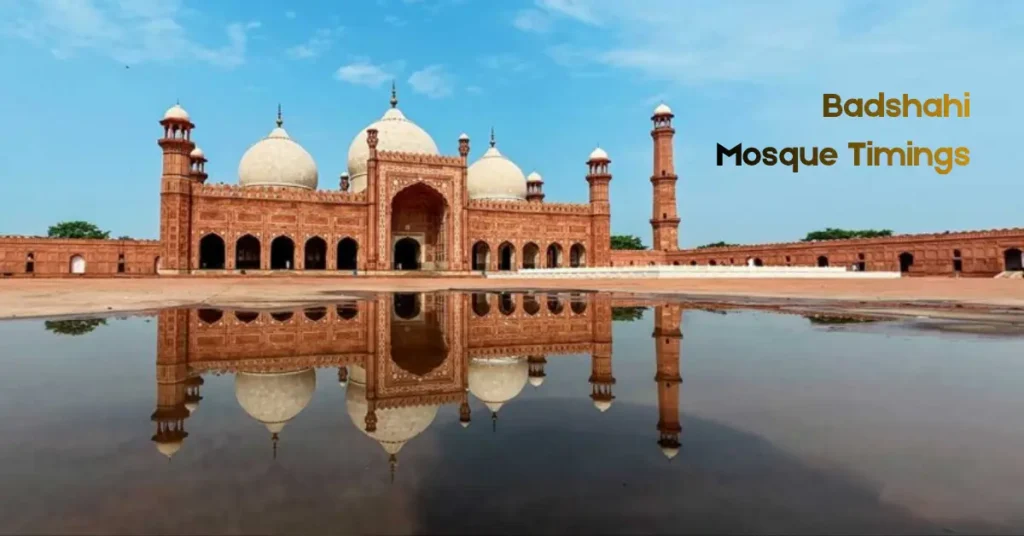
If you’re planning a visit to Badshahi Mosque and want to align your trip with prayer timings, it’s helpful to check the complete Lahore Prayer Times 2026 – Today’s Namaz Timing & Monthly Calendar for accurate daily and monthly schedules. This will help you plan your visit around Fajr, Zuhr, Asar, Maghrib, or Isha prayers with ease. Check out our full guide on Lahore Prayer Times 2026 – Today’s Namaz Timing & Monthly Calendar.
| Day | Opening Time | Closing Time |
|---|---|---|
| Monday | 8:00 AM | 8:00 PM |
| Tuesday | 8:00 AM | 8:00 PM |
| Wednesday | 8:00 AM | 8:00 PM |
| Thursday | 8:00 AM | 8:00 PM |
| Friday | 8:00 AM | 8:00 PM |
| Saturday | 8:00 AM | 8:00 PM |
| Sunday | 8:00 AM | 8:00 PM |
The mosque is open all seven days of the week. Entry is free for everyone. There is no ticket required to visit. However donations are welcome and help with the maintenance of this historic building.
On Fridays the mosque gets very crowded during Jummah prayer time. If you are visiting as a tourist it is better to arrive before 12:00 PM or after 2:00 PM on Fridays. This way you avoid the rush and can explore the mosque more comfortably.
During Ramadan the mosque stays open longer and has special timings for Taraweeh prayers at night. Always check the latest timings before visiting during Ramadan.
Entry Fee and Ticket Price
One of the most common questions people ask before visiting Badshahi Mosque is about the entry fee. Here is everything you need to know.
| Visitor Type | Entry Fee |
|---|---|
| Pakistani Visitors | Free |
| Foreign Visitors | Free |
| Children | Free |
| Guided Tour | PKR 500 to PKR 1000 (Approx) |
| Photography (General) | Free |
| Special Photography Permit | Contact Mosque Administration |
Badshahi Mosque has no entry fee for anyone. It is completely free to visit for both Pakistani and foreign visitors. You do not need to buy any ticket to enter. This is one of the reasons it attracts so many visitors every single day.
However there are a few things to keep in mind. If you want a guided tour you can hire a local guide at the mosque. A guide usually charges between PKR 500 to PKR 1000. They speak both Urdu and English. A good guide will tell you stories about the mosque that you will not find in any book.
For general photography the mosque is free and photography is allowed in most areas. However during prayer times please be respectful. Do not take photos of people praying without their permission.
If you are a professional photographer or filmmaker and need special access you should contact the mosque administration in advance. They can arrange special permits for professional shoots.
Foreign visitors will find Badshahi Mosque one of the most affordable world class heritage sites they have ever visited. You get to see a 350 year old Mughal masterpiece completely free of charge.
How to Visit Badshahi Mosque
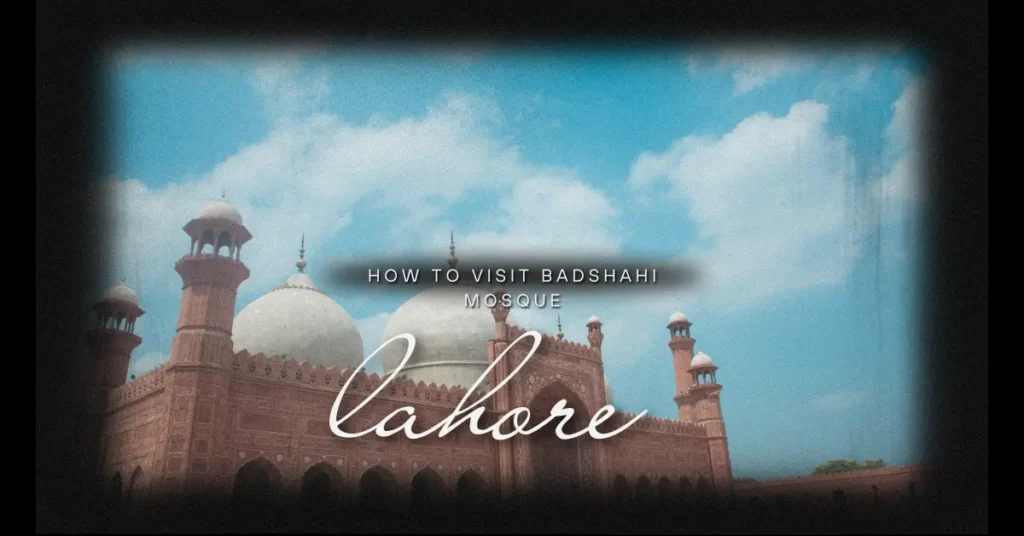
Visiting Badshahi Mosque is a wonderful experience. But a little planning makes it even better. Here is everything you need to know before you go.
Best Time to Visit
The best time to visit Badshahi Mosque is early morning or just before sunset. In the morning the mosque is quiet and peaceful. You can explore without large crowds. At sunset the red sandstone walls turn a deep golden color. It is one of the most beautiful sights in all of Lahore. Avoid visiting at Jummah time on Fridays if you are a tourist. The crowds are very large between 1:00 PM and 2:00 PM on Fridays.
Badshahi Mosque also holds special significance during the later hours of the day and night, as worshippers gather here for Isha prayer, and many devotees stay back to offer Tahajjud in the peaceful hours before dawn, or Ishraq shortly after sunrise. To learn more about the exact timings of these prayers, check out our complete guide on Isha, Tahajjud & Ishraq Prayer Times in Lahore: Complete Guide 2026.
Dress Code
Badshahi Mosque has a strict dress code for all visitors. Here are the rules:
| Visitor | Dress Code |
|---|---|
| Men | Full length trousers and covered shoulders |
| Women | Full body coverage with head scarf |
| Children | Modest clothing covering arms and legs |
| Shoes | Must be removed before entering prayer areas |
If you are not dressed appropriately you may be asked to cover up at the entrance. Women should always carry a scarf when visiting. Shoe storage is available at the entrance free of charge.
Photography Rules
Photography is allowed inside Badshahi Mosque. The courtyard, domes, minarets, and entrance gate all make for stunning photos. However there are a few rules to follow.
Do not take photos during prayer times. Be respectful of people who are praying. Do not photograph other visitors without their permission. Drone photography is not allowed without a special permit from the mosque administration. Professional filmmakers need to contact the administration in advance for permission.
Parking Information
Parking near Badshahi Mosque can be challenging especially on Fridays and during Ramadan. Here are your best options:
Lahore Fort parking area is the closest option. It is just a short walk from the mosque entrance. You can also park near Minar e Pakistan and walk across Iqbal Park to the mosque. If you are coming by rickshaw or taxi just ask the driver to drop you at the Alamgiri Gate of Lahore Fort. The mosque entrance is right there.
The easiest way to reach the mosque without parking hassle is the Orange Line Metro Train. Get off at Lahore Fort Station and walk a few minutes to the mosque.
Safety Tips
Badshahi Mosque is very safe for all visitors. But here are a few tips to make your visit smooth.
Keep your belongings close in crowded areas. Visit in groups if possible especially for female visitors. Carry water if you are visiting in summer. The courtyard is very large and fully open so heat can be intense. Do not leave your shoes unattended at the entrance. Use the designated shoe storage area. If you are visiting with children keep them close as the courtyard is very large and crowded during peak times.
Nearby Attractions
One of the best things about visiting Badshahi Mosque is that you are already in the most historic part of Lahore. Everything around the mosque is worth seeing. You can easily visit all these places in one day.
Lahore Fort
Lahore Fort is right opposite Badshahi Mosque. The two landmarks face each other across Hazuri Bagh. Lahore Fort is a UNESCO World Heritage Site. It was built and expanded by several Mughal emperors over hundreds of years. Inside you will find stunning palaces, gardens, and historic halls. Entry fee is PKR 500 for Pakistani visitors and more for foreign tourists. Do not miss this when you are visiting Badshahi Mosque.
Minar e Pakistan
Minar e Pakistan is a short walk from Badshahi Mosque. It is the national monument of Pakistan. It was built to mark the spot where the Pakistan Resolution was passed on March 23, 1940. You can go to the top of the tower for a beautiful view of the old city and Badshahi Mosque from above. It is free to visit and a must see for every Pakistani.
Hazuri Bagh
Hazuri Bagh is the historic garden that sits between Badshahi Mosque and Lahore Fort. It was built by Maharaja Ranjit Singh in the early 1800s. The beautiful Baradari pavilion in the centre of the garden is one of the finest examples of Sikh architecture in Lahore. When you walk from the mosque to Lahore Fort you pass right through Hazuri Bagh. It is a peaceful and beautiful spot in the middle of all the history.
Wazir Khan Mosque
Wazir Khan Mosque is located inside the old city near Delhi Gate. It is about 15 minutes by rickshaw from Badshahi Mosque. Built in 1641 it is actually older than Badshahi Mosque. What makes it special is the detailed tile work covering every inch of its walls. The colorful geometric and floral patterns are considered among the finest examples of Mughal art in the world. If you love architecture this mosque is absolutely worth visiting.
Here is a quick guide to all nearby attractions:
| Attraction | Distance from Badshahi Mosque | Entry Fee |
|---|---|---|
| Lahore Fort | Walking Distance | PKR 500 |
| Minar e Pakistan | 5 Minute Walk | Free |
| Hazuri Bagh | Walking Distance | Free |
| Wazir Khan Mosque | 15 Minutes by Rickshaw | Free |
Interesting Facts About Badshahi Mosque
Most people know Badshahi Mosque as a beautiful historic building. But there is a lot more to this mosque than meets the eye. Here are some facts that will surprise you.
- Built in Just Two Years Badshahi Mosque was completed in only two years from 1671 to 1673. For a building of this massive size that is truly remarkable. Most large buildings of this era took decades to finish. The speed of construction is one of the most impressive things about this mosque.
- Once the World’s Largest Mosque When it was completed in 1673 Badshahi Mosque became the largest mosque in the world. It held that title for over 300 years. It was only surpassed in 1986 when the Faisal Mosque in Islamabad was expanded. That is an incredible record for any building.
- Can Hold Over 100,000 Worshippers The courtyard of Badshahi Mosque can hold more than 100,000 people at one time. During Eid prayers the entire courtyard fills up completely. It is one of the largest open worship spaces anywhere in the world.
- Added to UNESCO Tentative World Heritage List In 1993 Badshahi Mosque was added to UNESCO’s tentative World Heritage List. This means it is officially recognised as a site of outstanding global importance. It joins Lahore Fort which is already a full UNESCO World Heritage Site.
- Directly Faces Lahore Fort Badshahi Mosque was deliberately built to face the Alamgiri Gate of Lahore Fort. This was not a coincidence. Emperor Aurangzeb wanted the mosque and the fort to create a visual symbol of Mughal power and faith together. Standing between them in Hazuri Bagh you can feel exactly what he intended.
- Used as a Military Stable During the Sikh period in the early 1800s the mosque courtyard was used as a stable for army horses. It was a very dark chapter in the mosque’s history. But the building survived and was fully restored after Pakistan’s independence.
- Hosts Sacred Relics Inside the mosque there are special rooms that hold sacred relics including strands of hair from the Prophet Muhammad (PBUH). These relics are kept with great care and are a source of deep spiritual significance for Muslims who visit.
- A Natural Acoustic Wonder The prayer hall has a remarkable natural echo system. A whisper from one corner of the hall can be heard clearly in the opposite corner. This was not accidental. The Mughal architects designed it this way so the Imam’s voice could carry across the hall without any equipment.
Frequently Asked Questions
Conclusion
Badshahi Mosque is not just a building. It is the heart of Lahore. It has stood for over 350 years through empires, wars, and generations of change. Every stone of this mosque tells a story. Whether you are visiting to pray, to learn, or to explore, Badshahi Mosque will leave a mark on you that you will never forget. Plan your visit in 2026 and experience one of the greatest masterpieces ever built. Once you stand in that courtyard and hear the azan echo across the red sandstone walls, you will understand why people call it the soul of Lahore.